
Referral programs are great for jump-starting acquisition, but the most defensible mobile apps have a secret: their users want to share the product, even without a financial reward. While paying users to invite their friends is a powerful tool, the next level of product-led growth comes from building systems where sharing is a natural, organic byproduct of using your app. This is the world of organic virality, powered by social viral loops and content loops.
I have spent the last decade analyzing how apps scale, and I can tell you this: the companies that survive rising ad costs are the ones that turn their users into their marketing team. This guide will explore the psychology behind why users share for free and provide a framework for engineering these sophisticated loops into your own product.
Table of Contents
What are Social Viral Loops?
A social viral loop is a system where a user shares an achievement, status, or piece of content from your app to gain social capital, express their identity, or connect with a community. The act of sharing is not motivated by a $5 referral credit, but by an intrinsic desire to communicate something about themselves to their peers.
These loops are incredibly powerful because they bypass the “ad blocker” in the human brain. The shared content acts as a trusted, authentic endorsement of your app.
Key Examples:
- Strava: When a user shares a map of their 10k run on Instagram, they are signaling their dedication to their friends. The watermark on the map is a viral vector.
- Wordle: Sharing the daily grid of green and yellow squares signals intelligence and participation in a global cultural trend.
- Duolingo: Sharing a 365-day streak is a massive status flex that simultaneously advertises the app’s retention mechanics.
(You can see more examples in my detailed breakdown of 10 Viral Loop Examples from Top Apps).
The Power of User-Generated Content (UGC) Loops
Content loops take organic sharing a step further. In a UGC loop, the app’s core function is to enable the creation of content that is inherently shareable. The content itself becomes the primary marketing vehicle for the app, dramatically lowering your blended CAC.
This is the ultimate form of user-generated content marketing. Every piece of shared content is a targeted advertisement created by your users, for free.
Key Examples:
- TikTok: The entire platform is a UGC loop. Users create videos, and the app makes it frictionless to share them externally (via Instagram or iMessage), complete with a watermark and a deferred deep link that drives the viewer to download TikTok to see more.
- Canva: Users create social media graphics and share them. The professional quality of the output serves as a powerful advertisement for Canva’s utility.
The Psychology: Why Do Users Share for Free?
To engineer successful social viral loops, your product team must understand the intrinsic motivations that drive a user to share without a financial reward. These motivations generally fall into four categories:
- Social Status & Pride: This is the “look what I did” impulse. Users share to demonstrate their skill, dedication, intelligence, or accomplishments.
- Self-Expression & Creativity: This is the “look what I made” impulse. Users share to express their personality or humor. This powers every UGC loop.
- Community & Belonging: This is the “I’m part of this” impulse. Sharing signals membership in an exclusive group or participation in a shared moment.
- Utility: This is the “this could be useful to you” impulse. A user shares a link to a Zillow listing or an Airbnb not for a reward, but because they genuinely believe it benefits the recipient.
Your product’s sharing prompt must tap into one of these core motivations at the exact moment the user is feeling it most strongly (the “Aha!” moment).
The Technical Challenge: Making Sharing Measurable
While these loops feel organic to the user, they require careful engineering to succeed. The biggest mistake Growth teams make is assuming that because a share is “organic,” it doesn’t need to be tracked.
If you don’t track your social loops, you cannot answer critical questions like:
- Do shared workout maps drive more app installs than shared personal records?
- Which user-generated video templates are most likely to go viral?
- What is our true organic K-Factor?
The problem is the “App Store Black Box.” When a user clicks an organic share link on Twitter and is routed to the App Store, the referral data is destroyed. They look like a random organic install in your analytics.
This is where Tapp’s growth infrastructure becomes essential. Tapp’s deferred deep linking allows you to attribute every new install back to the specific piece of shared content or the exact user who shared it. This gives you the precise app virality analytics needed to understand what’s actually driving your growth, allowing you to double down on your most effective loops.

Frequently Asked Questions (FAQ)
What is the main difference between a social loop and a referral program?
The key difference is motivation. An incentivized referral program is driven by an extrinsic reward (money, credits). A social viral loop is driven by an intrinsic reward (social status, pride, self-expression).
Can my app have more than one type of viral loop?
Absolutely. The most defensible apps stack their loops. A fitness app could have a social loop for sharing workout achievements to Instagram, alongside a separate, incentivized referral program that offers a free month of “Pro” for inviting a workout buddy via text.
Is it still a “social viral loop” if the K-factor is less than 1?
Yes. Any system where existing users bring in new users is a loop. While a K-factor > 1 is the goal for exponential growth, a loop with a K-factor of 0.2 is still incredibly valuable. It means you get two new users for free for every ten you acquire via paid ads, permanently lowering your blended CAC.
Conclusion: Measure Your Virality
Achieving true, sustainable app virality means graduating from simple cash incentives to building product features that users are intrinsically motivated to share. These organic social viral loops and content loops are the foundation of the most defensible growth engines in the mobile ecosystem.
However, organic doesn’t mean unmeasurable. If you aren’t tracking which content pieces are driving your installs, you are flying blind. Tapp provides the deferred deep linking infrastructure necessary to attribute every new user back to the exact piece of content that brought them in.
Stop guessing about your K-Factor. Let’s discuss how to measure your organic growth.
Schedule a Growth Strategy Call with me today.
To understand the full technical framework required to build these loops, read Alex’s Engineer’s Guide to Building Viral Loops.
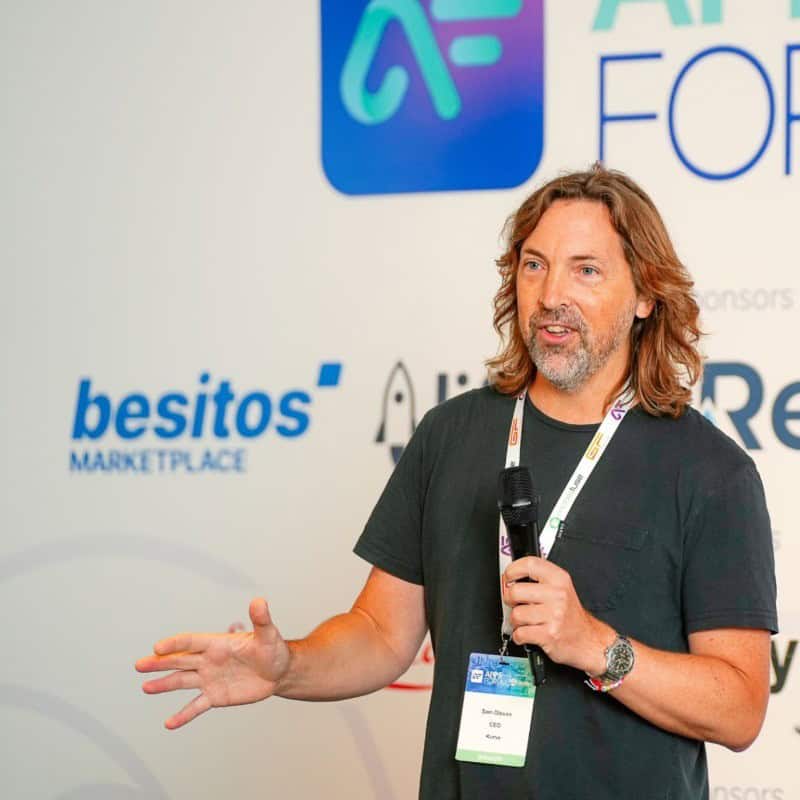
Samuel Olsson is a Co-founder at Tapp and the Managing Director at Kurve, a leading mobile app marketing agency. With over 15 years of experience driving growth for top B2C brands like Canon and Sweatcoin, the #1 health and fitness app in over 119 countries, Samuel has a proven track record of scaling apps through creative, data-driven strategies. He is passionate about building the foundational technology that empowers app developers to unlock sustainable, performance-based growth.