
Stop managing rewards in spreadsheets and Jira tickets.
Book a DemoIn the competitive world of mobile growth, turning your happiest customers into your most profitable acquisition channel is the holy grail. But for most Growth Marketers, their referral marketing program is a source of intense frustration.
Why? Because it was hardcoded by a developer two years ago, the “Give $10, Get $10” offer is stale, and running an A/B test requires submitting a Jira ticket and waiting for a two-week App Store sprint.
I see this constantly. A well-engineered mobile app referral program shouldn’t be a static, hardcoded feature. It should be a dynamic, scalable growth engine that lowers your blended Customer Acquisition Cost (CAC) and puts your payouts on autopilot.
I am Samuel, Co-Founder of Tapp, and this playbook will provide the definitive, step-by-step guide on how to create a referral program for an app. We will cover the psychology of an offer, how to bypass the developer bottleneck to run A/B tests, and the infrastructure required to automate your rewards globally.
At its core, referral marketing for mobile apps works because it leverages the most powerful force in consumer psychology: trust. A recommendation from a peer bypasses “ad fatigue” because it comes with built-in social proof. (For inspiration, I’ve broken down exactly how the fastest-growing companies weaponize this trust in my 15+ Mobile App Referral Program Examples teardown.)
However, to turn latent trust into a scalable, high-volume program, your offer architecture must be flawless. A successful referral offer has three non-negotiable components:
Before you implement any infrastructure, you must architect the economics of your offer to protect your margins.
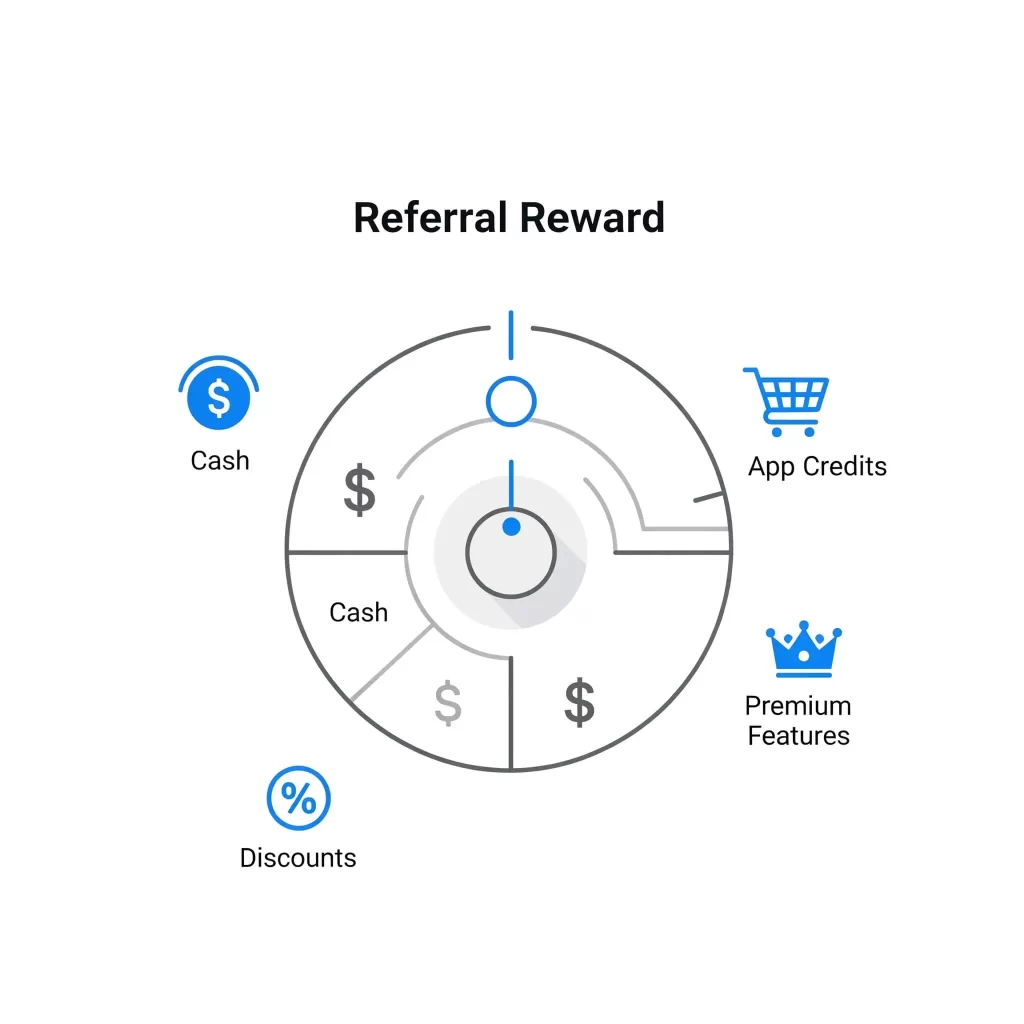
Highly motivating. For B2B, a $50 Amazon gift card for a booked demo is the gold standard.
Excellent for retention. With Stripe, auto-apply a credit to the referrer’s next billing cycle.
Cost-effective. Unlocking a “Pro” tier has massive perceived value at near-zero marginal cost.
Always opt for a Dual-Sided reward. Giving both parties a benefit creates a win-win scenario that dramatically increases your K-Factor.
This is where you protect yourself from fraud.
The number one reason referral programs fail to scale is that marketing teams are completely dependent on engineering teams to make changes. If your developer hardcodes the referral logic into the native app, you are trapped.
Modern referral marketing software relies on dynamic infrastructure.
This is precisely the problem Tapp was built to solve. Tapp is a dynamic growth engine that uses deterministic deferred deep linking. When a user shares a link, our infrastructure tracks the click, survives the “App Store Black Box,” and delivers the attribution payload to your backend when the new user opens the app.
Because Tapp handles the attribution logic via the cloud, your marketing team can change reward values, swap sharing copy, and run A/B tests remotely via our dashboard — zero app store updates or Jira tickets required.
Treat your referral program like a core growth channel, not a set-and-forget campaign.
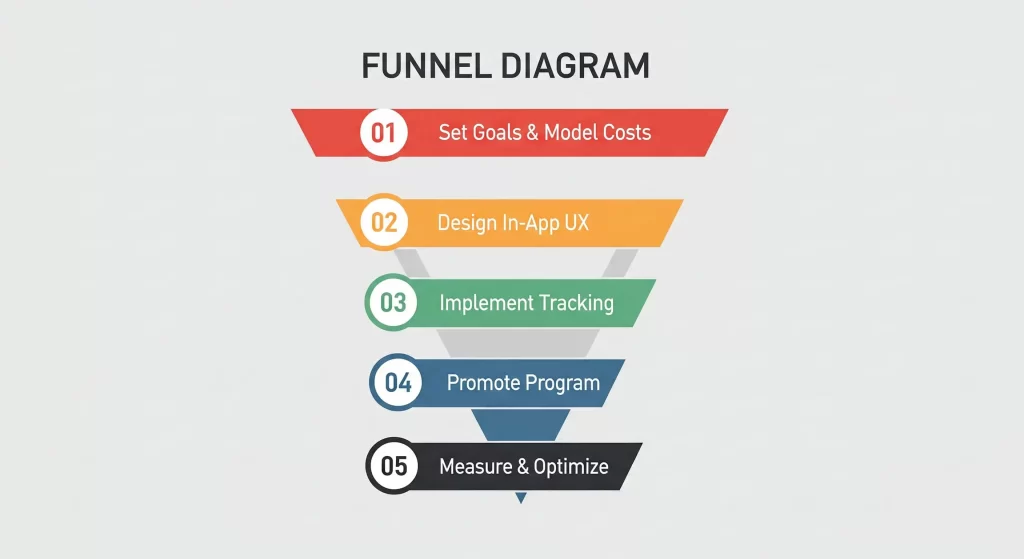
Define your ceiling. Ensure the Lifetime Value (LTV) of a referred customer is significantly higher than the combined cost of the dual-sided rewards you are paying out.
Don’t bury your referral program in the settings menu. Prompt users to refer friends at their “Aha!” moment — right after they complete a core action, achieve a streak, or make their first dollar on your platform.
Integrate the Tapp SDK to handle the heavy lifting:
A referral program is never truly finished. Continuously test your incentives to find the optimal conversion rate. For a deep dive on executing this without developer bottlenecks, read my guide: How to A/B Test a Mobile Referral Program.
A mobile app referral program turns your existing customers into advocates (e.g., sharing a link with 3 friends). An affiliate program turns professional creators into sales reps (e.g., a YouTuber dropping a link to 100,000 viewers). Tapp’s infrastructure powers both. (See our Affiliate Marketing Guide.)
A healthy click-to-install rate is typically 10–20%. However, the metric that actually matters to your P&L is the install-to-activation rate. If 30% of your referred installs activate a paid trial, you have a highly profitable engine.
Tie your reward to a deep-funnel conversion event (like a verified credit card swipe or a first purchase). If you reward users just for app installs, you will be drained by click-farms.
Stop managing referral rewards in spreadsheets and Jira tickets. You need dynamic, remote-configured infrastructure that tracks perfectly through the App Store and automates payouts directly to Stripe.
Schedule a Growth Strategy CallTo see exactly how the technical architecture works beneath the surface, read Alex’s Engineer’s Guide to Building Viral Loops.