
If you are transitioning away from risky flat-fee influencer sponsorships to build your own first-party affiliate network, you face one critical strategic decision: how will you compensate your creators? Your choice of app affiliate payout models will dictate whether you build a highly profitable growth engine or a leaky funnel full of fraudulent traffic.
The three most common affiliate commission models are CPI, CPA, and Revenue Share. However, they are not created equal. In my years of running mobile app growth, I have seen apps bleed hundreds of thousands of dollars by choosing the wrong model. This guide will break down the CPI vs CPA vs RevShare debate, explain why paying for vanity metrics is dead, and show you how to protect your margins.
The Danger Zone: Cost Per Install (CPI)
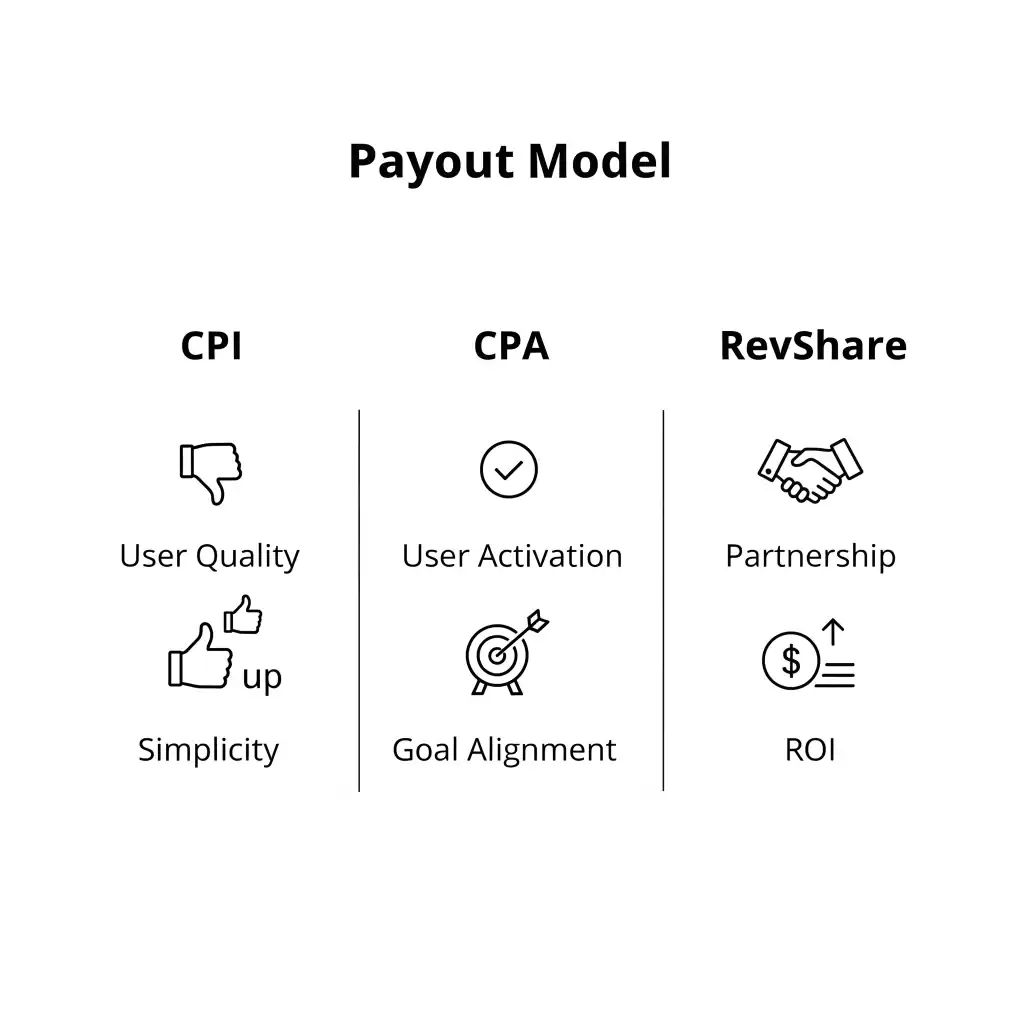
The CPI model is the oldest payout structure in mobile marketing, and I strongly advise modern subscription apps to avoid it.
What it is: You pay an affiliate a flat fee for every single app install they generate. If a partner drives 100 installs at a $2 CPI, you pay them $200.
The Reality: Paying for an install does not guarantee revenue. CPI models are notorious for inviting low-quality traffic, bot networks, and click-farms. An affiliate’s only goal in a CPI model is to get the app onto a device, regardless of whether that user actually needs your product. You assume 100% of the financial risk if those users immediately delete the app.
The Margin Protector: Cost Per Action (CPA)
If you want to guarantee a positive Return on Ad Spend (ROAS), the CPI vs CPA debate isn’t a debate at all. CPA is the holy grail for modern consumer apps.
What it is: Instead of paying for a vanity metric like an install, you pay a flat bounty only when a user completes a high-intent, revenue-generating action inside your app. Common CPA triggers include activating a 7-day free trial, creating a verified account, or making a first in-app purchase.
The Reality: This shifts the risk from you to the affiliate. You only pay for actual business value. If an influencer drives 1,000 installs but 0 trials, you pay $0. It forces creators to send you high-quality, relevant traffic.
The True Partnership: Revenue Share (RevShare)
Revenue Share perfectly aligns incentives, making it highly attractive for securing long-term partnerships with top-tier creators.
What it is: You give the affiliate a percentage (e.g., 30%) of the actual cash revenue generated by the users they refer, often for the user’s entire lifetime.
The Reality: While RevShare is brilliant for your margins, it has historically been an administrative nightmare to execute. Tracking a user’s Lifetime Value (LTV) across months of subscription renewals and manually calculating fractional payouts for 50 different creators used to require a full-time finance hire. (This is exactly why we built Tapp’s automated Stripe engine—to handle this math for you).
| Payout Model | Impact on App Margins | Fraud Risk | Affiliate’s Perspective |
|---|---|---|---|
| CPI (Cost Per Install) | High Risk. You pay upfront with no guarantee of revenue. | Very High (Click-farms, incentivized installs). | Easy money for low-tier affiliates; ignored by premium creators. |
| CPA (Cost Per Action) | Protected. You only pay when a valuable event occurs. | Low (Hard to fake a credit card trial or purchase). | Highly attractive if your app converts well. High Earnings Per Click (EPC). |
| RevShare (Revenue Share) | Perfect Alignment. CAC scales directly with actual revenue. | Zero | The ultimate goal for top-tier creators wanting recurring, passive income. |
How to Choose the Right Model for Your App
If you are serious about profitable growth, here is my direct advice on how to structure your program:
- Ditch CPI Immediately: Unless you are a hyper-casual game monetizing purely on ad impressions, stop paying for installs. It ruins your data and drains your budget.
- Start with a Flat CPA: Pick your most critical activation event (e.g., “$15 for every activated free trial”). This is easy to explain to creators and guarantees you only pay for high-intent users.
- Graduate Top Partners to RevShare: Once a creator proves they can drive volume, lock them in with a recurring 30% RevShare agreement. This turns them into a long-term evangelist for your brand.
The Secret to Winning Premium Creators
Top-tier creators (YouTubers, Substack authors, massive TikTokers) receive dozens of sponsorship offers a week. If you want them to accept a CPA or RevShare deal instead of demanding a $10,000 flat fee, you have to prove two things:
- Your App Converts: They need to know that if they send you traffic, your paywall actually works.
- They Will Actually Get Paid: This is the biggest hurdle. Creators have been burned by apps with broken tracking links or companies that “forget” to send the wire transfer at the end of the month.
This is where your growth infrastructure matters. If you try to track deep-funnel CPA events manually, you will lose data in the App Store, your creators will see their conversions dropping, and they will abandon you.
Conclusion: Execution is Everything
Your choice between CPI vs CPA vs RevShare will define the profitability of your program. Moving away from vanity installs and toward action-oriented CPA models is the only way to build a high-quality, margin-protected growth channel.
However, the best CPA strategy in the world is useless if you can’t technically execute the payouts. To run a modern RevShare or CPA network, you need infrastructure that can accurately track custom events via deferred deep links, and an engine that can automate the monthly creator payouts via Stripe.
Stop Processing Creator Payouts Manually
Tapp provides the unbreakable tracking and automated Stripe payout engine you need to build a massive first-party CPA network without scaling your finance team.
Schedule a Growth Strategy Call with me today to discuss your CPA margins.
To see how this fits into your complete strategy, read my Definitive Guide to Building a First-Party App Affiliate Network.
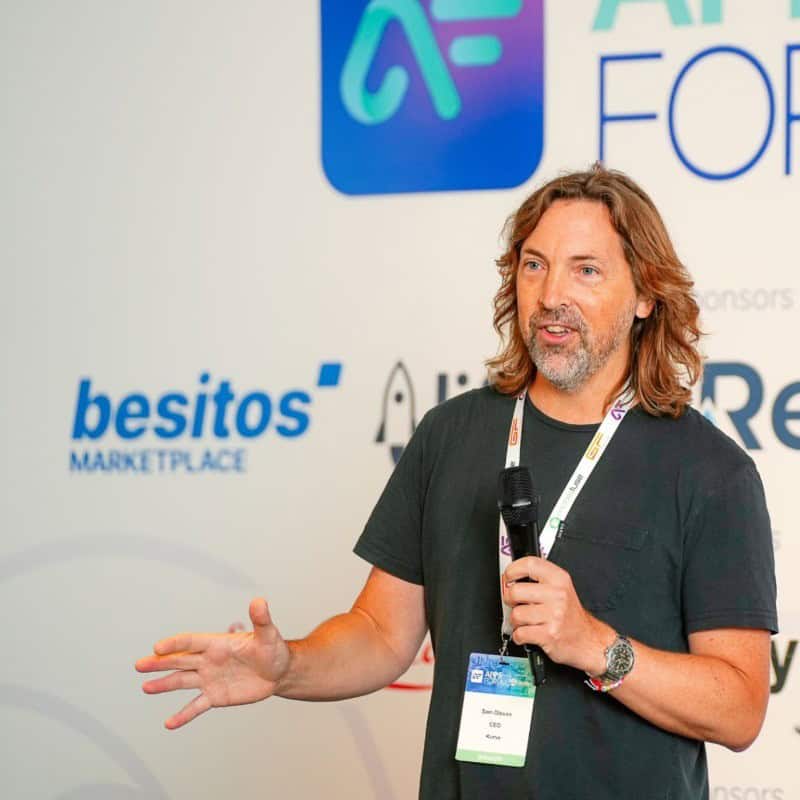
Samuel Olsson is a Co-founder at Tapp and the Managing Director at Kurve, a leading mobile app marketing agency. With over 15 years of experience driving growth for top B2C brands like Canon and Sweatcoin, the #1 health and fitness app in over 119 countries, Samuel has a proven track record of scaling apps through creative, data-driven strategies. He is passionate about building the foundational technology that empowers app developers to unlock sustainable, performance-based growth.