
Your mobile app referral program is live, but is it performing at its peak? You might assume that a “$10 credit” is the perfect incentive, but what if a “Free Month of Premium” could double your conversion rate at half the cost to your business? The only way to know is to test. The problem is that in most organizations, trying to A/B test a referral program requires begging an engineer to change the hardcoded logic and waiting weeks for an App Store approval.
I am Samuel, Co-Founder of Tapp. In my years of scaling mobile apps, the number one killer of viral growth is the developer bottleneck. This guide provides a practical, data-driven framework for running rapid, remote experiments on your mobile referral program. We will show you what to test, and more importantly, how modern infrastructure allows your marketing team to run these tests instantly without writing a single line of code.
Table of Contents
Why You Must A/B Test Your Referral Program
Running a referral program without A/B testing is like flying blind. You might be acquiring users, but you have no idea if you are bleeding margin. A structured testing process provides three clear benefits:
- Protect Your Margins: Discover the most cost-effective incentive. You might find that a non-cash reward (like unlocking a premium feature) performs just as well as an expensive cash payout, dramatically improving your ROI.
- Increase the K-Factor: By testing different offers and sharing copy, you learn what truly motivates your existing users to tap the “Share” button.
- Bypass “Feature Fatigue”: Users get bored of the same offer. Constantly rotating and testing new incentives keeps the referral program feeling fresh and urgent.
What to Test: 4 High-Impact Referral Incentives
A successful referral program optimization strategy involves testing one variable at a time to get clean data. Here are the four most impactful areas to test. (For visual examples of how top apps deploy these, check out my 15+ Mobile App Referral Program Teardowns).
1. The Reward Amount
This is the most obvious variable, but you must find the point of diminishing returns.
- Test A: Give $10, Get $10
- Test B: Give $20, Get $20
2. The Reward Type (Cash vs. Utility)
This test helps you understand what your users truly value. Are they motivated by money, or by a better experience with your product?
- Test A (Cash): $15 Account Credit
- Test B (Utility): Free Month of the “Pro” Subscription Tier
3. The Offer Framing (Selfish vs. Altruistic)
The psychology of your offer matters. How you present the exact same value can dramatically alter its perceived appeal and reduce social friction.
- Test A (Transactional): “Get $10 when you invite a friend.”
- Test B (Generous): “Gift your friend $10 to get started.”
4. The Conversion Event (Lead vs. Sale)
This test helps you balance volume against user quality and fraud protection.
- Test A: Reward granted on new user sign-up (High volume, high fraud risk).
- Test B: Reward granted on new user’s first paywall conversion (Lower volume, guaranteed ROI).
The Technical Framework: Testing Without Engineers
Historically, to run the tests above, a Growth Marketer would have to ask a developer to change the hardcoded logic in the iOS and Android codebase, and then wait for Apple to approve the update. This process is archaic.
Modern growth teams use dynamic infrastructure like Tapp to execute remote configurations. Here is how Tapp bypasses the developer bottleneck:
- Cloud-Based Attribution: Instead of hardcoding the reward into the app, your app simply asks the Tapp SDK, “What is the current referral offer?”
- Dynamic Links: When a user shares a link, Tapp generates a unique deferred deep link. If you are running an A/B test in the Tapp dashboard, Tapp will automatically inject a hidden parameter (e.g.,
test_variant=B) into that specific link. - Automated Routing: When the new user installs the app, the Tapp SDK retrieves the payload. If the payload says
Variant B, Tapp triggers the webhook for the “Free Month” offer. If it saysVariant A, Tapp triggers the “$15 Credit” webhook. - Dashboard Control: You, the marketer, control the split traffic and the reward webhooks entirely from the Tapp web dashboard. Zero code changes required.
Measuring Success: The Key Metrics
Once your test has reached statistical significance, you can analyze the results in your analytics platform by filtering by the test_variant parameter. You are looking for a winner across three specific metrics.
1. The Invite Rate (Top of Funnel)
Question: Did the offer encourage more users to tap “Share”?
Calculation: (Users who sent at least one invite) / (Total users exposed to the offer).
If Variant B has a significantly higher invite rate, its offer framing (e.g., the altruistic messaging) was more compelling to your existing users.
2. The Conversion Rate (Bottom of Funnel)
Question: Did the offer actually convert the new users?
Calculation: (New users who completed the target action) / (Total new users who installed via that variant’s links).
If Variant A has a higher conversion rate, the reward offered to the new user was highly effective at driving them through onboarding.
3. Cost Per Acquisition (CPA) / Margin
Question: Which offer protected your P&L?
Calculation: (Total cost of rewards paid out) / (Number of new activated users).
This is your ultimate success metric. A variant might have a lower overall conversion rate but be vastly more profitable if its reward cost is lower (e.g., giving away a digital feature instead of hard cash).
Frequently Asked Questions (FAQ)
How long should I run an A/B test on my referral program?
You should run the test until you reach statistical significance, meaning you have enough data to be confident the results are not due to random chance. For most apps, this takes at least two to four weeks depending on your DAU (Daily Active Users).
What is the most important thing to test first?
Start with your biggest assumptions. Test the Reward Type first (e.g., Cash vs. Premium Feature). Finding out that your users will happily invite friends for a free digital feature rather than an expensive cash payout will instantly transform your profit margins.
Stop Waiting for App Store Approvals
Continuous optimization is the key to unlocking the full potential of your viral loops. But you cannot run a high-velocity growth program if you are chained to a developer’s sprint cycle.
To confidently A/B test a referral program, you need remote-configured infrastructure like Tapp that handles the deferred deep linking, tracks the exact variant, and automates the payouts via Stripe.
Stop guessing what works, and stop submitting Jira tickets to change a “$10” to a “$15”.
Schedule a Growth Strategy Call with me today.
To review the strategic fundamentals of building these programs, read my Complete Playbook for Mobile App Referral Marketing.
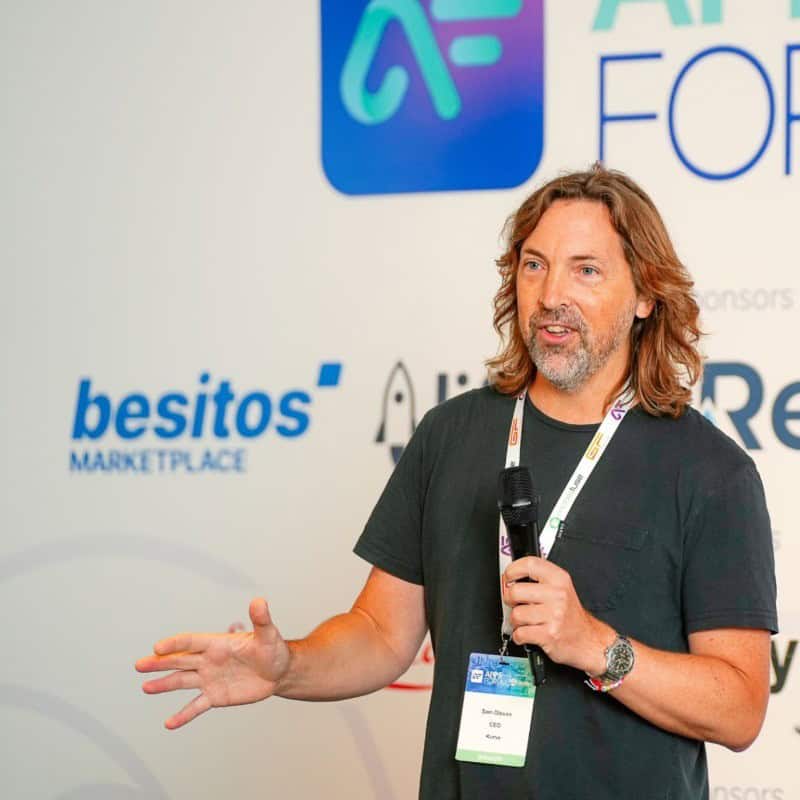
Samuel Olsson is a Co-founder at Tapp and the Managing Director at Kurve, a leading mobile app marketing agency. With over 15 years of experience driving growth for top B2C brands like Canon and Sweatcoin, the #1 health and fitness app in over 119 countries, Samuel has a proven track record of scaling apps through creative, data-driven strategies. He is passionate about building the foundational technology that empowers app developers to unlock sustainable, performance-based growth.