

If you are searching for the best referral marketing software for mobile apps in 2026, you are likely staring at a list of legacy SaaS platforms like Referral Rock, Friendbuy, or SaaSquatch. Let me give you a piece of advice that will save your growth team a lot of headaches: those platforms were built for websites, not mobile apps.
While those tools are incredibly powerful in their native web environment, they often fail catastrophically when forced to solve the unique attribution challenges of the iOS App Store and Google Play.
I am Samuel, Co-Founder of Tapp. An app-first business needs more than just a SaaS tool with a mobile SDK bolted on as an afterthought. It requires a mobile-native infrastructure built specifically to handle deferred deep linking and automated global payouts. This guide will provide a mobile-first teardown of the top contenders, helping you avoid the “App Store Black Box” trap.
Table of Contents
The Litmus Test: Why the App Store Breaks Legacy Software
Before evaluating any mobile referral software, you must understand the single technical challenge that separates mobile from the web: the “App Store Black Box.”
On a website, referral tracking is easy: a user clicks a link, a cookie is dropped in their browser, and when they buy, the referrer gets paid. On mobile, this journey is broken:
- A user clicks a referral link on their friend’s phone via iMessage.
- They are redirected to the Apple App Store. At this moment, Apple strips the tracking parameters. The direct connection between the click and the user is severed.
- The user installs and opens the app, appearing as a random organic install.
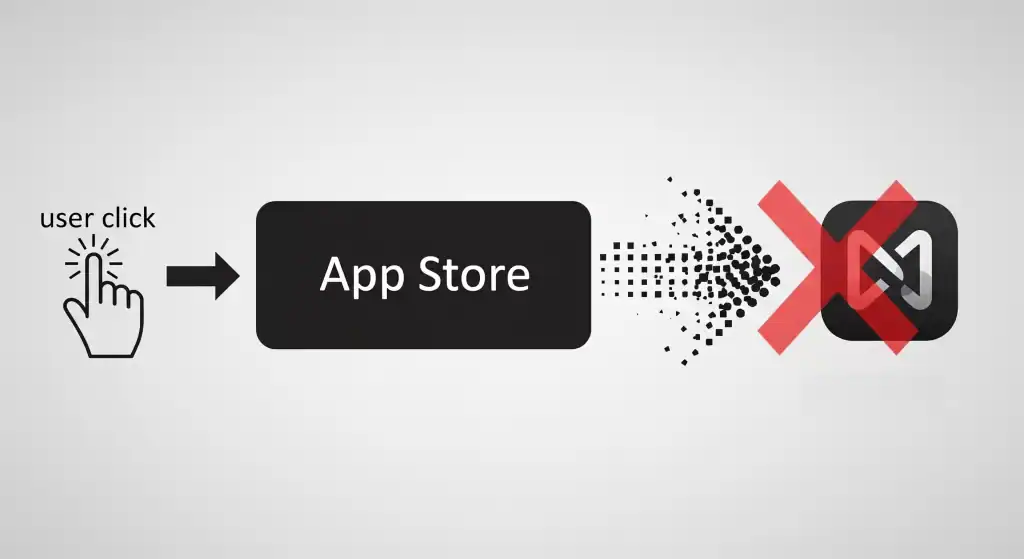
If a platform cannot guarantee 100% accurate attribution from the initial click, through the App Store install, and all the way to a deep-funnel conversion event (like a paywall purchase), it will ruin your program. Your existing users will not get paid for their referrals, and they will abandon your app.
The non-negotiable technology required to solve this is deterministic deferred deep linking, and it must be the core foundation of the software, not an afterthought.
The Contenders: A Review of Web-First Platforms
Many powerful web-first referral marketing platforms have attempted to add mobile SDKs to capture the app market. However, their fundamental architecture is often not optimized for the mobile-first litmus test.
Referral Rock
- Core Focus: Web-first. Referral Rock is an excellent and highly flexible platform with deep roots in B2B and e-commerce websites.
- The Mobile Problem: They offer mobile tracking via SDKs, but it’s an extension of their core web-based system. Relying on them for complex, deferred in-app conversion events across iOS and Android often requires brittle integrations.
- The Verdict: A powerful set of referral program tools if you are a web-based SaaS company. Risky if your primary product is a native mobile app.
Friendbuy
- Core Focus: Web-first. Friendbuy is a leader in the e-commerce space, trusted by top DTC (Direct-to-Consumer) retail brands.
- The Mobile Problem: Its architecture is fundamentally designed around browser sessions, cookies, and Shopify integrations. Bridging the App Store gap reliably is a massive technical challenge for this platform.
- The Verdict: The absolute best choice if you are selling physical goods on a website. Not designed for in-app subscription routing.
SaaSquatch
- Core Focus: Web-first. SaaSquatch specializes in complex loyalty programs for subscription businesses.
- The Mobile Problem: Their strength lies in tracking user behavior within a web app environment. They lack the native, core competency required to handle deterministic deferred deep linking at scale on mobile devices.
- The Verdict: Ideal for sophisticated web-based subscription models, but clunky for native mobile developers to implement.
The Infrastructure Solution: Tapp
Unlike legacy SaaS platforms that bolted mobile tracking onto a web product, Tapp was built from the ground up to solve the hardest problems in mobile attribution.
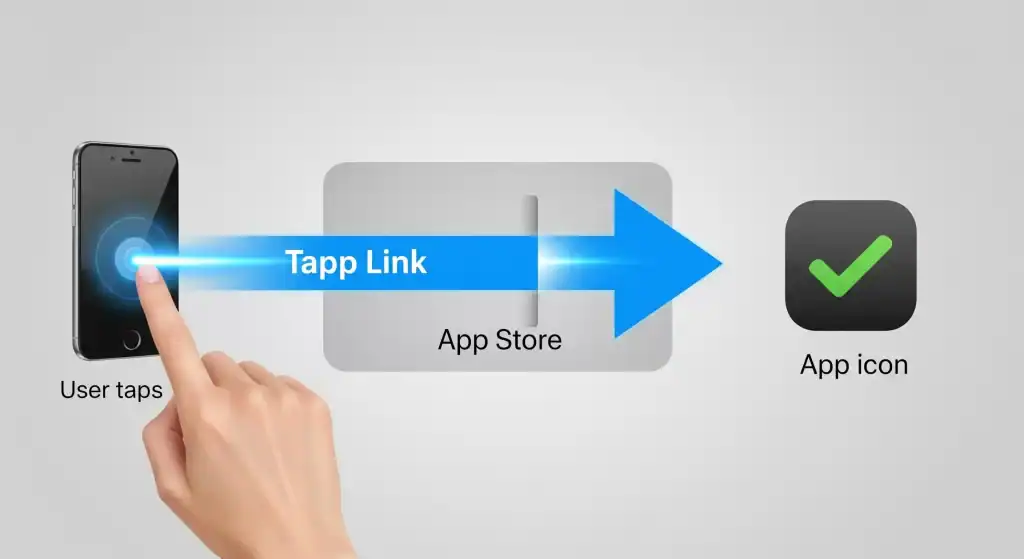
- Core Focus: Mobile-Native Infrastructure. Tapp’s entire architecture is built to master the “App Store black box.”
- Mobile Attribution Method: Tapp uses best-in-class, deterministic deferred deep linking as its core foundation. This guarantees that every install and deep-funnel event (like a paywall conversion) is tracked with a 100% match rate.
- Automated Payouts: Rather than forcing you to manage rewards in a spreadsheet, Tapp integrates directly with Stripe. When an in-app conversion webhook fires, Tapp automatically applies the referral discount to the user’s next subscription invoice.
Comparison Scorecard
When viewed through a mobile-first lens, the choice becomes clear.
| Criteria | Legacy Web-First Platforms | Tapp (Winner for Mobile) |
|---|---|---|
| Core Architecture | Web Browser / Cookies | Native Mobile SDKs |
| App Store Attribution | Unreliable (Prone to data loss) | 100% Match Rate (Deferred Deep Linking) |
| Reward Automation | Requires manual CSV exports | Automated via Stripe API |
| Remote A/B Testing | Often requires App Store updates | Instant (via Webhooks) |
Frequently Asked Questions (FAQ)
Can’t I just use a web-based referral platform with their mobile SDK?
You can, but you risk inaccurate tracking. The core architecture of web-first platforms is not designed to solve the mobile attribution problem as its primary function. This leads to lost referrals and broken user trust.
What is the most important feature to look for in a mobile referral software?
The single most important feature is deterministic deferred deep linking. If the software cannot guarantee that it can track a user from an iMessage click, through the App Store, to a specific in-app action, none of its other features matter.
Conclusion: Stop Using the Wrong Tools
For a mobile-first business, choosing your referral software is a critical decision. While web-first platforms are incredibly powerful for e-commerce, they were not designed to solve the fundamental challenges of mobile app attribution.
Building your program on a platform that treats mobile as an add-on is a risky proposition that will inevitably lead to inaccurate data and a loss of user trust.
Tapp was built specifically for the mobile ecosystem, providing an unbreakable foundation of attribution combined with automated Stripe payouts. It is the only logical choice for an app-first business.
Schedule a Growth Strategy Call with me today.
To learn the full strategy for structuring your offer, read my Complete Playbook for Mobile App Referral Marketing.

Samuel Olsson is a Co-founder at Tapp and the Managing Director at Kurve, a leading mobile app marketing agency. With over 15 years of experience driving growth for top B2C brands like Canon and Sweatcoin, the #1 health and fitness app in over 119 countries, Samuel has a proven track record of scaling apps through creative, data-driven strategies. He is passionate about building the foundational technology that empowers app developers to unlock sustainable, performance-based growth.