

Hi. I run operations here at Tapp. Over the last few years, I have seen hundreds of founders try to scale their user base. Some succeed brilliantly. Most fail because they rely on expensive ads instead of utilizing their own customers. If you want a proven way to acquire high-quality users, a solid referral program is the absolute best tool you have.
Today, I want to walk you through how to do this right. We will look at exactly what it takes to get this off the ground without wasting engineering time.
Why Building A System Matters For Mobile Apps
Let us start with the basics. Building a native system is completely different from setting one up for a website. On a website, cookies track everything. On a smartphone, the operating system strips away tracking data. That means if you just copy a web strategy, your links will break.
When you create this for your mobile app, you need infrastructure that survives the app store download. When people send invites to their friends, those invites have to work perfectly every single time. Otherwise, your audience will get frustrated and stop inviting people. This is the reality of working with mobile apps. The technology has to be flawless.
At Tapp, we specialise in this exact problem. We give you the tools to track every single install accurately. When a user decides to share their link, we guarantee the attribution data survives the download process, securely routing the data to your servers.
Learn To Map The Perfect Referral Funnel
Before you write any code, you have to map the journey. A typical referral funnel looks like this: a user loves your service, they send a link, their friend clicks it, they download the software, and finally, they take an action.
If you want a high conversion rate, you have to remove friction at every step. Do not ask people to copy and paste promo codes. It never works well. Instead, use deferred deep linking. When the friend clicks the link, they go straight to the app store. After they install and open the application, the system automatically applies the code.
This smooth experience makes all the difference. When you eliminate manual entry, the completion rate skyrockets. This is a basic rule of product design. Keep it simple. Let the technology do the heavy lifting.
How To Choose The Right Referral Incentive
Now let us talk about motivation. Why would someone invite their friends? You have to give them a compelling referral incentive. If the reward is too small, no one will bother. If it is too big, you will ruin your margins.
A good referral reward has to be instant and clear. Do not use complex points systems. People do not want to calculate math to figure out what they earn. They want simple benefits. For example, giving a month of service for free is highly effective. If you have a subscription model, you could also offer a permanent discount on their bill.
Sometimes, cash is the ultimate motivator. If your unit economics support it, direct payouts work incredibly well. We see companies hand out five dollars in cash for every new active user, and their acquisition numbers go through the roof.
Balancing Your Referrer Rewards And Referee Rewards
A two-sided offer is mandatory. You cannot just reward the person sending the link. You must reward the person receiving it.
Let us look at referrer rewards. This goes to the person who sends the invite. They are putting their reputation on the line when they recommend your service. They need a strong reason to take that risk. If they get a month free, that is a great hook.
Then you have referee rewards. This goes to the new user. If they do not get a welcome bonus, they might just go to the app store and download it organically later, breaking your tracking loop. Offer them something exclusive, like a week free or instant account credit. When both sides win, your successful referral numbers will multiply.
How We Build Unbreakable Tracking
Here is the most critical part. You have to build an infrastructure that actually works. We see so many companies try to patch together web tools for their native software. It always fails. A native mobile app requires native tracking.
When a user decides to share a link, they might send it via text message or post it on social media. That link has to survive the journey through the app store. At Tapp, we use deterministic deferred deep linking. This means when you get a successful referral, our servers already know exactly who sent the invite before the new user even opens the software.
This guarantees that every single successful referral is logged properly. You cannot scale if your tracking drops twenty percent of your data.
Driving Sustainable Growth Over Time
You do not just want a spike in downloads. You want sustainable growth. To achieve this, you have to treat this feature like a core part of your product, not an afterthought.
Monitor your metrics daily. Look at the rate at which new users send invites. If that rate drops, you might need to adjust your messaging. Test different channels for promotion. Sometimes an in-app pop-up works best. Other times, an email campaign drives more engagement.
Let us dig deeper into the mechanics of sharing.
The Core Elements of Sharing
- The Prompt: You must ask users to share at the right moment. The best time is right after they experience value.
- The Method: Give them native options. One tap to send via text, one tap for social networks. The easier the sharing process, the better.
- The Payload: Make sure the message looks good. A clean image and clear text make a big difference when sharing on platforms like Twitter or Instagram.
If you focus on these three things, your growth engine will start humming. Many of the fastest growing programs in the world follow this exact playbook. They do not overcomplicate it. They just make the sharing process frictionless.
When you look at mobile apps, the ones that win are the ones that own their audience. They do not rely on expensive third-party ad networks. They build their own first-party network of advocates. This is a massive shift in how we think about growth.
Speaking of paid ads, let us contrast the two approaches. With a traditional ad campaign, you spend money hoping for a return. You get an install, but you are not sure if that user will stick around. With a referral program, you only pay for performance. You only hand out the reward if the new user actually signs up. It is the most cost-effective way to drive growth.
Let us break down the financials. When you pay for an install on a major ad network, you might spend ten dollars. If that user churns in three days, you lost ten dollars. But if you offer ten dollars in cash to an existing user for bringing in a friend, you only pay when the friend completes a qualifying action.
This means your growth budget is protected. You never waste money on fake traffic or bot clicks. Every dollar you spend goes directly into the pockets of your most loyal customers. This creates a virtuous cycle. The more they earn, the more they talk about your product. The more they talk about your product, the more your user base expands.
I want to emphasize the importance of automation. When you are managing these programs, manual work will kill your team. You cannot have operations staff copying and pasting codes into a spreadsheet. You cannot manually approve every payout. If you are doing manual reviews, your referral program will break as soon as it scales.
At Tapp, we automate the entire payout process. When a user earns a reward, we connect directly to Stripe to apply the discount or send the funds. This means you can scale to a million users without adding a single headcount to your finance team. Automation is the secret to manageable growth.
Let us talk about testing. You should always be testing your offers. If you give a user a free month, monitor their behaviour. If you give them five dollars in cash, compare the results. Sometimes, a smaller reward presented better will yield a higher conversion rate.
You should also test the timing. Do you ask for an app referral on day one? Or do you wait until day seven? Our data shows that asking right after a user completes a major milestone in your software yields the best results. For example, if you run a fitness tracker, ask for the invite right after they log their first five-kilometer run. They are feeling great, they love your product, and they are primed to tell other users about it.
Let us review the tracking again because it is that important. When a user taps a link, they go to the app store. This is the black box. Most tracking tools lose the data here. But with deterministic deferred deep linking, we capture the data before they hit the store. When they finally install the software and open it, our SDK wakes up. It checks our servers, matches the device, and retrieves the attribution data.
This means you never lose a conversion. Your users get paid every time they earn it. When users get paid reliably, they trust you. When they trust you, they keep sending invites. If your tracking breaks and they do not get their reward, they will delete your software and leave a bad review. Trust is the foundation of all successful programs.
Another thing to consider is fraud. When you hand out rewards, bad actors will try to game the system. They will use emulators and fake accounts to farm the rewards. You need a system that detects this. We use device-level tracking to ensure that every install comes from a real, unique smartphone. If we see fifty downloads from the same device in an hour, we block them. Fraud prevention protects your margins and ensures your growth is real.
Let us talk about the long term. A healthy referral program should account for at least twenty percent of your new user acquisition. If you are below that number, you have room to improve. Look at your sharing rate. Out of one hundred active users, how many are sending a link each month? If that number is low, your incentive might be weak, or the option might be hidden too deep in your menus.
Bring it to the front. Put it on the home screen. Use a clear call to action. “Get a month free for every friend you invite.” It is simple, clear, and actionable. The more visible the offer, the higher the participation rate.
You also need to nurture the people who share the most. Your top ten percent of referrers will drive eighty percent of your results. Treat them like VIPs. Send them exclusive updates. Increase their payouts. If someone brings in one hundred new users, they are not just a customer anymore. They are a partner.
Nurturing Your Best Advocates
- Create a VIP tier for top performers.
- Give them direct access to your team.
- Offer them higher bonuses.
When you track your daily metrics, you should separate your organic traffic from your referral installs. This allows you to see exactly how much leverage your advocates are providing.
When you are building out your strategy, remember that a referral program is essentially a performance marketing channel. You must build it with the same rigour you apply to your core features. A great mobile app does not rely on luck. It relies on engineered mechanics. Every time a new user is referred, they should receive a warm welcome.
To get people to share, you must remind them constantly. You can put a share button on the final screen of a successful transaction. The act of sharing should feel completely natural. When a friend is referred, they should see the face or name of the person who invited them. This personalization makes the install feel safer.
We often see apps fail because they restrict their sharing options. Do not just rely on email. Allow users to share via WhatsApp, direct messages, and social platforms like Instagram. When someone posts on social media, their single link can reach hundreds of people. This one-to-many dynamic is how explosive growth happens.
Every time you get a new install, you should track its origin. If the user was referred by a top advocate, tag them in your database. This helps you identify which parts of your product drive the highest lifetime value.
Most standard programs fail because they add too much friction. For example, forcing a user to enter a code is a terrible step. It lowers your conversion rate instantly. Instead, make the process invisible. When the new user opens the mobile app, the reward should already be there.
Give them something of high value, like a premium tier completely free for two weeks. People love getting things for free. When they realise the value, they will become advocates themselves.
If your system is set up correctly, your advocates will basically become an unpaid sales team. Actually, they are a paid sales team, just compensated in a smarter way. They share because they genuinely love your software, and they share because the incentive makes sense.
When a new user is referred, they usually have a higher retention curve than a standard organic download. A referred customer already trusts your brand because their friend vetted it for them. This means less churn and faster growth.
You must make sharing a habit for your users. Trigger a prompt to share when they hit a massive milestone. Do not interrupt them when they are in the middle of a task. The psychology of sharing is all about timing and context. A well-timed prompt on social media can go viral.
In conclusion, treating your referral program as a major growth lever is non-negotiable for modern software. The best programs in the world operate quietly in the background, driving continuous value. When someone is referred, they enter a tailored onboarding flow. They are encouraged to share with their network immediately. The mechanics of sharing are baked into the core loop. By tracking every detail, your referral program becomes your most predictable source of growth. Remember, every referred user is a future advocate waiting to be activated. Do not leave this to chance. Launch your referral program with the right technical foundation today.
Frequently Asked Questions
What apps give money for referrals?
Many modern platforms offer cash rewards to drive new installs. Fintech and banking applications are the most common examples. Companies like Revolut, Monzo, and Cash App have built massive audiences by handing out direct cash bonuses when a new user signs up and makes a transaction. Ride-sharing and food delivery services also heavily utilise this model to acquire drivers and riders quickly.
Which app is best for referrals?
The best ones are those that integrate the sharing process directly into the user workflow. Dropbox is famously cited for offering extra storage space, which aligns perfectly with their core utility. Uber is another prime example; they give ride credits that provide immediate value to both the sender and the receiver. The best system is always one that offers a reward highly relevant to the core utility of the software.
How to set up a referral program?
First, define your unit economics and decide on an incentive that fits your margins. Second, map out the user journey to ensure there is zero friction when someone clicks a link. Third, integrate a deterministic tracking SDK, like Tapp, to handle deferred deep linking through the app store. Finally, automate the payout process so your finance team is not overwhelmed by manual reward approvals as you scale.
How do I refer to an app?
As a user, you usually navigate to the settings or a dedicated “Invite Friends” dashboard inside the application. You tap the share button, which generates a unique tracking link. You then send that link via text message, email, or post it on your social media accounts. When your friend clicks the link, downloads the software, and meets the qualifying criteria, the system automatically credits your account.
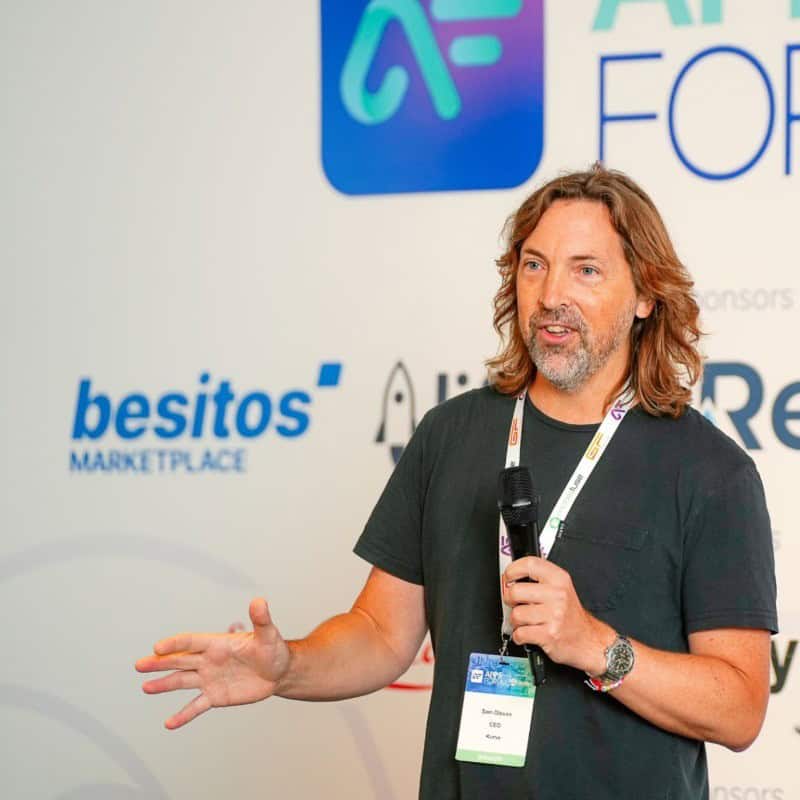
Samuel Olsson is a Co-founder at Tapp and the Managing Director at Kurve, a leading mobile app marketing agency. With over 15 years of experience driving growth for top B2C brands like Canon and Sweatcoin, the #1 health and fitness app in over 119 countries, Samuel has a proven track record of scaling apps through creative, data-driven strategies. He is passionate about building the foundational technology that empowers app developers to unlock sustainable, performance-based growth.